
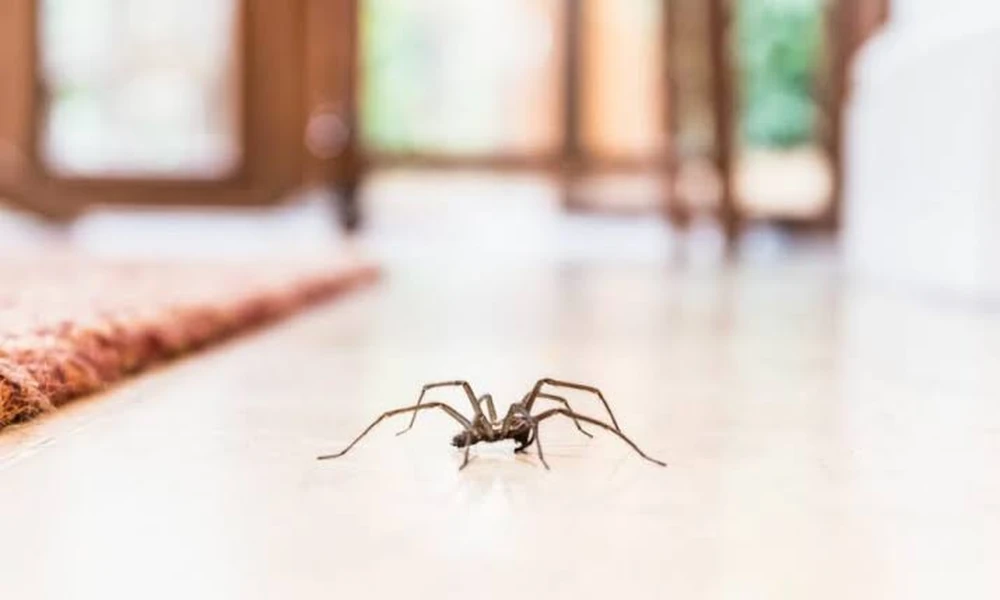
Because it is mating season. Male house spiders leave their webs in autumn to search for females, and they wander across your floors where you can see them.
Finding so many spiders in your house in October is normal across the UK. It rarely means you have an infestation.
Why the numbers jump in autumn
The giant house spider (Eratigena atrica) is the one most people meet. Males reach adulthood in late summer, then spend several weeks roaming at night. With legs outstretched, a male can span around 10cm, so one spider can look like three.
Females stay in their webs. Anything sprinting across the lounge carpet is almost certainly a male on a mission.
Cooler nights add to it. Spiders drift towards warmth, and a house with the heating on beats a damp shed.
The spider in your bath is usually a male too. He wandered in, then could not climb the slippery sides back out.
Which spiders are in your house?
Three species account for most sightings:
- Giant house spider: large, brown, with long hairy legs, quick across open floors.
- Cellar spider: tiny body, very long thin legs, hangs upside down in loose webs near ceilings.
- False widow: rounded and glossy, with pale markings on the back, usually found in window frames and sheds.
Nearly all of them are harmless. The false widow is the only one that makes headlines, and its bite is usually compared with a wasp sting. Ring NHS 111 or see your GP if swelling spreads or you feel unwell.
Myths that waste your money
Conkers on the windowsill are the classic fix. There is no solid evidence they work. Peppermint oil sprays have no reliable evidence behind them either.
A web in the corner does not mean you have an infestation. It means the spider found flies or moths to eat. Clean homes get spiders too, so a few cobwebs say nothing about your housekeeping.
What actually reduces them
1. Vacuum webs and egg sacs weekly, including behind sofas and under beds. Empty the bag outside.
2. Fit brush strips to external doors and seal gaps around pipes and window frames with silicone sealant.
3. Swap cardboard boxes in the loft and garage for lidded plastic boxes.
4. Close curtains at dusk. Lit windows draw moths, and moths draw spiders.
5. Fix dripping taps and clear fly sources. Less food means fewer hunters.
When pest control makes sense
Most homes do not need it. Call a pest control company if you find spiders in large numbers all winter, if you keep finding false widow nests in a home with young children, or if a phobia stops you from using a room.
A single visit usually costs between £60 and £150, depending on your area and the firm. The technician applies a residual treatment that kills spiders as they cross it. It does not stop new ones arriving, so sealing gaps matters more than spraying.
Quick answers
Will they go away on their own?
Mostly yes. Males die after the mating season, so numbers usually thin out through November.
How do I remove one safely?
Place a cup over it, slide a card underneath and release it outdoors, well away from the door.
What about the spider stuck in the bath?
Lay a towel over the side so he can climb out. Do not run the tap.
Do spiders bite people in bed?
Rarely. Most bites happen when a spider gets trapped against skin, for example in clothing or bedding.
The October spike is short
So many spiders in your house in October is a seasonal visit, not a sign that something is wrong. Vacuum, seal the gaps and keep a cup and card by the door. Call a professional only if the numbers stay high after Christmas.
