
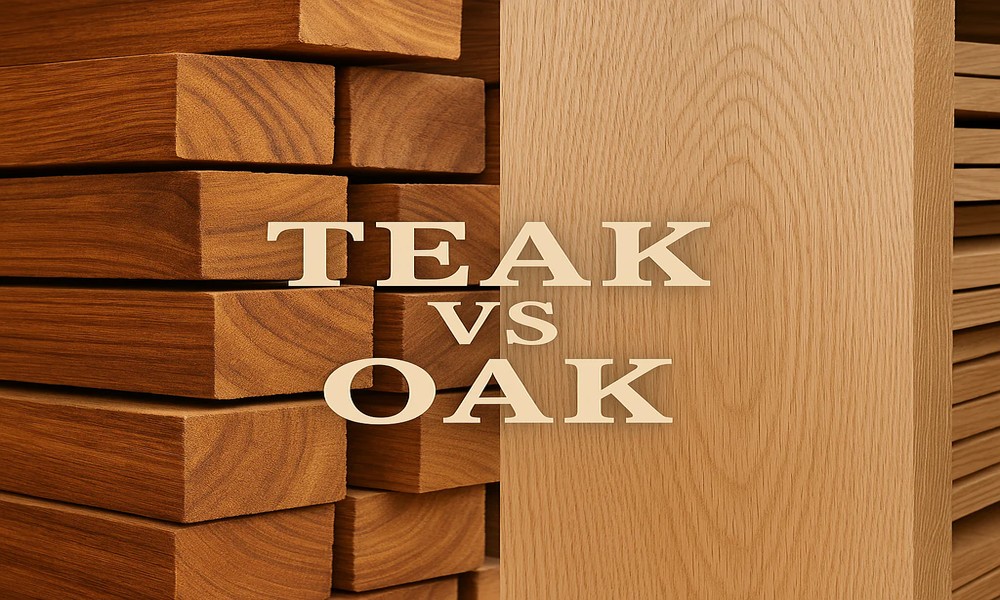
The choice of finish material for the furniture in your interior space is integral to the overall appearance of your completed project. Teak and oak finishes each possess unique aesthetic properties, inherent durability and classic beauty. By understanding the similarities and differences between teak and oak veneer, you can select the veneer that will best suit your project.
Teak veneer sheets are cut from solid teak (Tectona grandis). Teak veneer sheets provide a warm, rich colour and are completed with natural oils to give a feeling of luxury to your completed interior space.
Characteristics:
- Gold tones/small to mid-brown in wood colour
- Even and consistent grain structure
- Naturally pest-resistant and moisture-resistant
- Exceptional lifespan
Oak Veneer
Solid oak (Quercus) is used to produce an oak veneer sheet. have a very distinct grain pattern, lighter colour and are commonly found in contemporary interiors.
Characteristics:
- Light to medium-brown colour
- Distinctive, prevalent, textured wood grain structurally
- Durability of the surface area
- Versatile applications to suit a variety of design styles
Teak vs Oak Veneer – Similarities and Differences
Distinguishing between the differences of veneers allows you to better select appropriate veneers for your project.
- Appearance: Teak veneers tend to have a smoother appearance with a more consistent grain, while oak veneers have bold and pronounced grain patterns on the surface
- Wood Tone: Teak veneers provide a deeper and warmer wood tone than oak veneers, whereas oak veneers have a lighter and more neutral wood tone
- Wood Durability: The natural resistance to insects and moisture provides a desirable property for teak veneer. While the oak veneer will also be durable; therefore, it may require added protection in those environments that will provide increased exposure of the oak veneer to moisture
- Wood Maintenance: Teak veneers will require minimal maintenance due to the properties of the oils in the physical wood structure. In comparison, oak veneers generally will require periodic finishing.
- Wood Style: Teak veneers are more complementary to classic and luxurious style designs than oak veneers, which are more complementary to contemporary style projects or minimalist style designs
Using Teak Veneer
Use teak veneers in locations where a rich look and physical durability are most important, with premium options like 807 Borneo Teak enhancing both aesthetics and performance.
Best Uses:
- Entry doors and window coverings
- Outdoor furniture
- Premium cabinet work
- High moisture areas
Using Oak Veneer
When a light tone and natural texture are desired, oak veneer sheets are an excellent choice, with refined options like 99109 – Bellagio Grey Oak enhancing the overall aesthetic.
Best Uses:
Selecting the Right Veneer for Your Project
When selecting between a teak veneer sheet and an oak veneer sheet, you should answer the following questions:
- What are the characteristics of the style, theme or design that you want to reflect?
- What is the intended function of the veneers?
- How are you going to maintain the proposed longevity of the veneers?
- Is sufficient consideration being given to how the veneers will proportionately complement the lighting and colour schemes used in the completed project?
- What other products may be utilised with the style and theme of the design of the project?
Conclusion
Ultimately, the main difference between a teak veneer sheet and an oak veneer sheet will reflect more on your design intent rather than other attributes. While teak offers opportunities for a welcoming appearance and durability, oak offers an adaptable solution and a very distinctive look. If you understand and apply each product’s benefit to create both an aesthetically pleasing and functional completed design. Utilising laminate products manufactured by Royale Touche can help you achieve this by providing a finished, balanced, and refined design throughout the total space.
