
Cleaning services after renovation Singapore have become something of a paradox in the city-state’s perpetual cycle of demolition and reconstruction, a necessary response to the fact that what makes a space new inevitably makes it, temporarily at least, profoundly uninhabitable. If you have ever completed a home renovation in Singapore and thought the hard part was over, you have likely discovered, to your dismay, that the real challenge begins precisely when the contractors pack up their tools and leave behind what appears to be a film set for a particularly gritty disaster movie.
The Invisible Aftermath
The thing about renovation dust is that it defies ordinary understanding. It is not merely dirt that has settled on surfaces, waiting obligingly to be wiped away. Construction particles, particularly those generated during Singapore renovations, represent an entirely different category of contamination. Silica dust from cut tiles, drywall particles that float for hours in air currents, cement residue that hardens into something approaching geological permanence, these substances require industrial intervention rather than a determined homeowner with a mop.
Singapore’s climate adds another layer of complexity to the equation. The humidity that makes the island feel perpetually like the inside of a greenhouse has an unfortunate tendency to bind with construction dust, creating what professionals delicately describe as a sticky film on surfaces. One might call it nature’s way of ensuring that renovation cleaning cannot possibly be accomplished on a weekend afternoon with supplies from the supermarket.
The microscopic scale of the problem becomes apparent when one considers that professional post-renovation cleaning services employ HEPA filters capable of trapping particles smaller than 0.3 microns. For reference, a human hair measures approximately 70 microns in diameter. The dust you cannot see presents as much of a problem as the dust you can.
The Professional Response
The industry that has emerged to address cleaning services after renovation Singapore challenges operates with a methodical precision that would satisfy the most demanding scientist. Professional cleaning specialists typically recommend scheduling services within 48 hours of construction completion, based on the sensible observation that fresh dust proves easier to remove before it settles into every microscopic crevice of your newly renovated space.
The process itself follows what industry practitioners call a 72-point checklist, though one suspects this number derives more from marketing appeal than scientific necessity. Regardless, the approach remains comprehensive:
Debris removal
Construction rubble, screw caps, protective coverings, and miscellaneous detritus that contractors somehow overlook
Industrial dust extraction
HEPA-filtered vacuum systems that capture particles ordinary household equipment simply redistributes
Surface cleaning
pH-neutral solutions that dissolve paint splatters and cement stains without damaging newly installed fixtures
Sanitization
Hospital-grade disinfectants targeting bacteria in locations most people would never think to clean
Window treatment
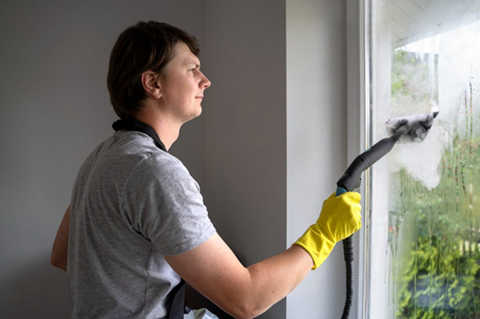
Streak-free glass achieved through lint-free cloths and ammonia-free solutions
Air quality improvement
VOC reduction through ventilation and specialized treatments
According to industry documentation, the typical post-renovation cleaning session requires between three and six hours, depending on property size and renovation scope. The process costs a minimum of S$220 to S$250 for standard apartments, with larger properties or more extensive renovations commanding proportionally higher fees.
The Health Calculation
What transforms cleaning services after renovation Singapore from luxury to necessity involves considerations that extend beyond aesthetics into public health territory. Construction dust contains substances that pose genuine risks to respiratory health. Leftover cement residue, for instance, can trigger allergic reactions in sensitive individuals. VOCs, those volatile organic compounds responsible for that distinctive new renovation smell, represent chemical emissions that linger in enclosed spaces.
Singapore’s Building and Construction Authority has increasingly emphasized indoor air quality standards, recognizing that residential health depends partly on proper post-construction cleaning. Professional services address hazards that homeowners typically lack equipment to handle properly. One client discovered this principle the expensive way when DIY cleaning attempts allowed cement residue to permanently etch quartz countertops, requiring restorative polishing that cost three times what professional cleaning would have cost initially.
The irony, of course, is that renovation aims to improve living conditions whilst temporarily rendering spaces nearly uninhabitable. The dust that coats every surface after contractors depart represents the literal breakdown of materials, molecular debris from walls demolished and tiles cut and paint applied. Without proper removal, this construction residue continues affecting air quality for weeks.
The Economic Reality
For facilities like NTL Storage undertaking renovation projects, the decision to employ professional cleaning services represents a straightforward cost-benefit calculation. The alternative, attempting to restore post-renovation spaces through ordinary cleaning methods, typically fails whilst consuming excessive time and effort. Professional services operate with industrial equipment, specialized knowledge, and systematic approaches that deliver results unattainable through amateur efforts.
The industry has proliferated in Singapore precisely because renovation remains perpetual. HDB flats undergo upgrading, condominiums refresh common areas, commercial spaces rebrand, and the cycle continues. Each renovation generates the same fundamental problem of post-construction contamination requiring specialized resolution.
The Settling Question
Perhaps the most telling indicator of professional cleaning necessity comes from timing recommendations. Industry specialists suggest booking services immediately after contractor departure, ideally before furniture arrives. This sequencing acknowledges a truth that homeowners often learn through bitter experience: moving furniture into dust-contaminated spaces simply spreads contamination whilst making thorough cleaning impossible.
The transformation from construction site to habitable space requires intervention beyond what homeowners typically envision when planning renovations. Budget calculations that account for materials and labour whilst ignoring professional cleaning invariably prove incomplete. The renovation concludes not when contractors depart but when professional cleaners restore the space to genuinely liveable condition.
Understanding this reality means recognizing that cleaning services after renovation Singapore form an essential final phase of any construction project, the necessary bridge between demolition and habitation, between the mess of transformation and the pleasure of renewed space.
