
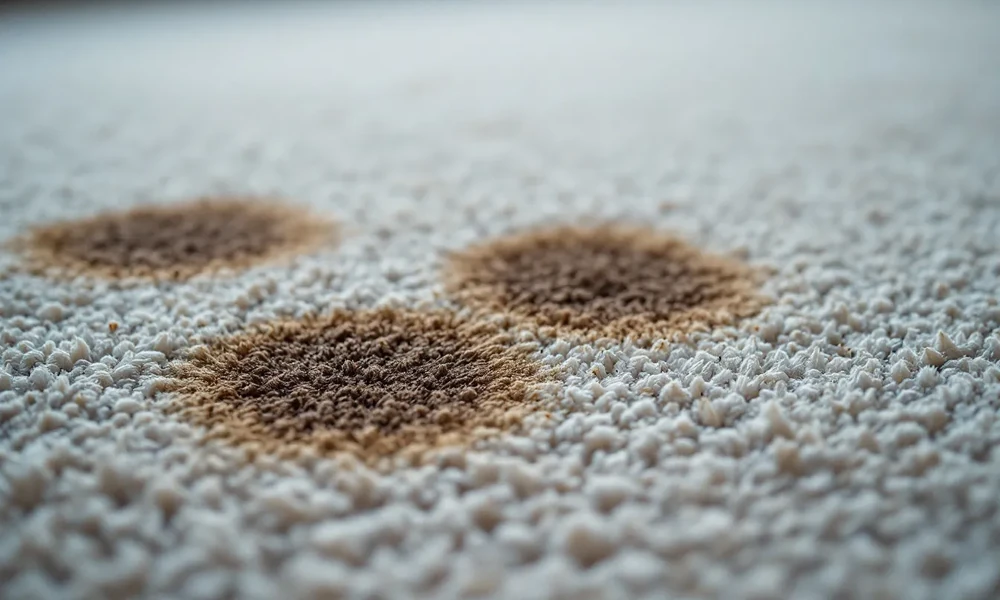
Spot cleaning fails on deep-set stains because the stain body sits below the reach of surface treatment. Visible marks show only the top of the material spread through the weave and padding. Surface products dissolve the top while the depth stays loaded. Dissolved residue then wicks upward as the fabric dries. Stain guidance from brisbaneupholsterycleaning explains the wicking cycle behind every returning mark. Liquids spread wide and sink deep within minutes of spilling. Drying locks material through the full fabric thickness. Spot work addresses one thin layer of that column. Every repeat attempt rewets the depth and restarts wicking. Removal needs full-column extraction rather than surface passes.
Stains sink past the surface
Stains sink past the surface because weave gaps carry liquid straight into the padding. Spilt drinks travel downward within minutes of landing. A coin-sized surface mark often covers a palm-sized zone below. Drying then binds the material throughout the whole column. Home sprays meet a fraction of the total load. The rest waits underneath every treated spot. Stain age hardens the problem inside family homes. Juice sugars crystallise and grip fibre across weeks. Milk and food proteins bond under warmth into fixed deposits. Old marks, therefore, hold larger zones than fresh ones. Depth plus age puts most stains past shelf products entirely.
Wicking brings stains back
Wicking brings stains back because drying pulls dissolved material upward toward the surface. Moisture applied from above reaches partway down. Deep residue dissolves into that moisture readily. Evaporation then draws the solution back up. Residue deposits exactly where drying finishes last. Marks reappear centred on the original spot. Returning marks often arrive darker than the original. Each attempt lifts more depth material toward the surface. Rings form where the spread moisture carries residue outward. Households read returns as stubborn stains rather than method failure. Recognising the cycle explains months of repeated frustration. Breaking it needs removal from the bottom up.
Wrong products set stains permanently
Wrong products set stains permanently by bonding or spreading, so that correct treatment would release them. Common household attempts cause most stains professionals meet.
- Hot water on blood, milk, or egg bonds proteins instantly into the weave.
- Coloured cloths transfer their own dye onto the wet worked zone.
- Supermarket foams leave sticky residue that gathers fresh soil within days.
- Vigorous scrubbing breaks the pile and leaves a permanently worn patch.
Damage from wrong attempts often exceeds the original stain. Correction then addresses both the mark and the attempt together. Blotting with a clean white cloth is the only safe home response. Everything past blotting risks shrinking the removal window.
Extraction removes the full column
Extraction succeeds because it removes the stain column from the bottom up. Matched treatment dissolves the specific stain type first. Heated solution reaches through fabric into padding. Strong lift pulls the dissolved column out completely. Nothing remains below for wicking to return. Marks handled this way stay gone permanently. Timing still shapes the outcome for households. Fresh deep stains release more fully than aged ones. Booking early preserves the widest removal window. Blot the spill, skip the experiments, and call promptly. One correct treatment beats months of returning marks. Families with children and pets meet this choice most often.
Depth, wicking, and product mismatch explain spot cleaning failure completely. Surface methods cannot reach material spread through the column. Extraction removes the source, so nothing returns upward. Households who buy fresh and book early keep fabric unmarked.
